
- sovasolar_admin
- Feb 14, 2026
- Uncategorized
- 0 Comments
Kolkata’s manufacturing sector including steel processing, jute mills, chemicals, food processing, and light engineering operates in one of India’s most energy-intensive industrial clusters. Rising grid tariffs, demand charges, and power reliability issues are putting pressure on operational margins.
For factory owners evaluating long-term cost control, industrial solar is no longer an environmental decision it is a financial strategy.
This guide explains how industrial solar systems reduce electricity costs, improve energy stability, and why working with experienced solar panel manufacturers in Kolkata and reliable solar power companies in Kolkata is critical for long-term ROI.
The Energy Challenge for Kolkata’s Industries
Industrial units in areas such as:
- Howrah
- Dankuni
- Haldia
- Uluberia
- Durgapur (extended industrial belt)
face three major energy problems:
1. High Industrial Tariffs
Commercial and industrial electricity tariffs in West Bengal are significantly higher than residential rates. Large factories consuming 50,000–5,00,000 units per month face heavy recurring costs.
2. Peak Demand Charges
Industries pay not only for units consumed but also for peak demand load. Poor load management increases monthly bills substantially.
3. Grid Reliability Concerns
Voltage fluctuations and outages disrupt production cycles and increase downtime costs.
Industrial solar directly addresses all three.
How Industrial Solar Reduces Energy Costs
1. Direct Reduction in Electricity Bills
A properly designed rooftop or ground-mounted solar plant can offset 40–80% of daytime electricity consumption.
Example:
A factory consuming 1,00,000 units per month installs a 500 kW solar system.
- Estimated annual generation: 6.5–7 lakh units
- Direct savings: Significant reduction in grid dependency
- Payback period: Typically 3–5 years
After payback, energy becomes nearly free for the remaining system lifespan (20+ years).
2. Peak Load Management
Solar generation occurs during peak production hours (10 AM–4 PM). This reduces:
- Maximum demand charges
- Strain on internal electrical infrastructure
For energy-intensive industries, this alone can improve monthly cost structure.
3. Long-Term Tariff Protection
Electricity prices rarely decrease. Solar locks in a stable energy cost for decades.
For manufacturing units planning 10–20 year operations, cost predictability is a strategic advantage.
Types of Industrial Solar Installations in Kolkata
Rooftop Solar Systems
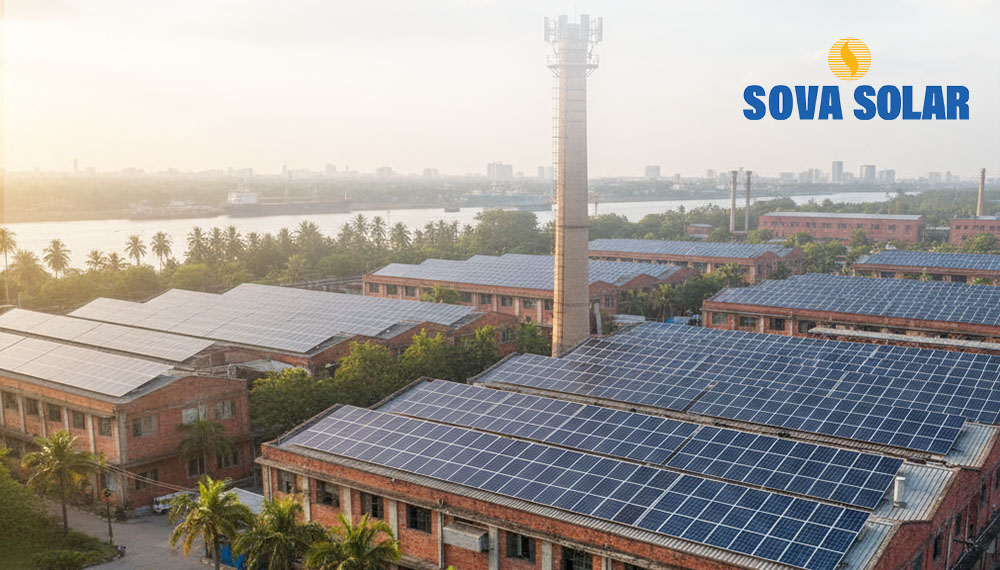
- Ideal for warehouses and factories with large metal sheet roofs
- Quick installation
- Minimal land requirement
Ground-Mounted Systems
- Suitable for factories with spare land
- Scalable capacity
Open Access Solar
- Ideal for industries with high consumption but limited rooftop space
- Solar power sourced from off-site plants
Experienced solar power companies in Kolkata evaluate structural load capacity, shadow analysis, and grid compliance before system design.
Financial Models Available
Industrial solar is flexible.
CAPEX Model
- Industry invests upfront
- Maximum long-term savings
- 3–5 year payback
RESCO / OPEX Model
- Zero upfront investment
- Pay per unit solar consumption
- Immediate bill reduction
Both models are widely used in West Bengal’s industrial zones.
Government Policies & Incentives
While large industries may not qualify for residential subsidies, they benefit from:
- Accelerated depreciation (under Income Tax Act)
- Net metering regulations
- State renewable energy policies
Working with compliant solar panel manufacturers in Kolkata ensures adherence to WBSEDCL regulations and technical standards.
Technology Considerations for Industrial Installations
Industrial environments require:
- High-efficiency modules (TOPCon or advanced PERC)
- PID-resistant panels
- Corrosion-resistant frames (especially in coastal areas like Haldia)
- Strong mounting structures for cyclone resilience
Cutting corners on module quality leads to:
- Faster degradation
- Production downtime
- Higher maintenance costs
This is why choosing reputable solar power companies in Kolkata is not optional it directly impacts plant reliability.
Environmental & ESG Benefits
Many manufacturing units now supply to global clients.
Export-oriented businesses increasingly face:
- Carbon reporting requirements
- Sustainability audits
- ESG compliance standards
Solar adoption improves:
- Carbon footprint metrics
- Brand positioning
- Eligibility for green supply chains
Frequently Asked Questions
How much can a factory in Kolkata save with solar?
Savings typically range between 40–70% of daytime electricity costs, depending on system size and consumption pattern.
Is industrial solar reliable during monsoon?
Yes. Generation reduces during heavy rain but remains functional. Annual output calculations already factor seasonal variation.
What is the lifespan of an industrial solar system?
Most systems are designed for 25 years with minimal degradation.
Can solar completely replace grid power?
Usually no. Solar offsets daytime load, while grid remains as backup.
Strategic Outlook for Kolkata’s Manufacturing Sector
Margins in manufacturing are tightening. Energy is one of the few controllable long-term costs.
Industrial solar offers:
- Predictable electricity pricing
- Faster ROI
- Improved ESG compliance
- Reduced dependency on unstable grid supply
Factories that adopt early gain a competitive advantage over those delaying transition.
Partnering with experienced solar panel manufacturers in Kolkata and trusted solar power companies in Kolkata ensures proper engineering, regulatory compliance, and long-term performance.
Industrial solar is no longer an experimental upgrade; it is a core infrastructure decision for Kolkata’s manufacturing future.