- sovasolar_admin
- Feb 26, 2026
- Uncategorized
- 0 Comments
Maharashtra is one of India’s largest industrial states, with strong clusters in textile manufacturing (Mumbai, Ichalkaranji, Solapur) and automotive production (Pune, Nashik, Aurangabad). These industries are energy-intensive and operate under tight cost margins, global competition, and increasing ESG compliance pressure.
For companies evaluating partnerships with solar panel manufacturers in Maharashtra or exploring solutions from reliable solar power companies in Maharashtra, solar energy is no longer optional; it is a strategic infrastructure decision.
This guide explains how solar solutions can transform energy economics for textile and automotive industries in Maharashtra.
Energy Challenges in Maharashtra’s Industrial Sector
1. High Industrial Tariffs
Industrial electricity tariffs in Maharashtra are among the higher slabs in India. Continuous operations in textile mills and automotive plants result in massive monthly energy bills.
Textile units run:
- Spinning machines
- Weaving looms
- Dyeing and finishing units
- Humidity control systems
Automotive plants operate:
- CNC machinery
- Assembly lines
- Robotic systems
- Paint shops
- Heavy-duty compressors
Energy is a direct production cost.
2. Continuous Load Requirements
Both industries require stable, high-load electricity throughout the day. Voltage fluctuations or grid instability can disrupt production cycles and damage sensitive equipment.
3. Global Sustainability Compliance
Many textile exporters supply to international brands requiring:
- Carbon footprint disclosure
- Renewable sourcing commitments
- ESG compliance reporting
Similarly, automotive manufacturers face pressure to decarbonize supply chains.
Solar directly improves sustainability metrics.
Solar Solutions for Textile Manufacturing Units
Textile manufacturing is particularly suitable for solar adoption because:
- Operations run primarily during daylight hours
- Large factory rooftops are available
- Consistent energy demand aligns with solar generation
Rooftop Solar Systems
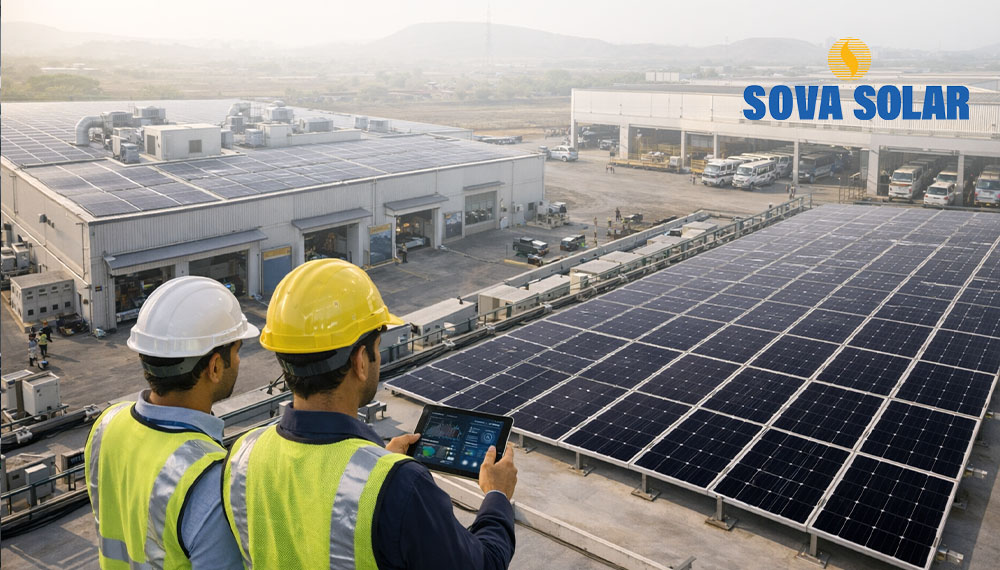
Most textile mills have expansive metal roofs ideal for rooftop solar installation.
Benefits include:
- Offsetting 40–70% of daytime electricity
- Reduced peak demand charges
- 3–5 year payback period (CAPEX model)
- 25+ years of low-cost electricity
Choosing high-efficiency modules from reputable solar panel manufacturers in Maharashtra ensures better output per square foot.
Open Access Solar for Large Units
For units with high consumption but limited rooftop space:
- Power can be sourced from off-site solar plants
- Long-term Power Purchase Agreements (PPAs) stabilize electricity cost
This model is increasingly popular among large textile exporters.
Solar Solutions for Automotive Manufacturing Plants
Automotive plants operate with:
- High automation
- Robotics
- Paint curing systems
- Heavy machinery
These facilities typically have:
- Large rooftops
- Available peripheral land
- High daytime load
Solar systems help reduce dependency on grid supply during peak operational hours.
Ground-Mounted Solar for Automotive Units
Plants with land availability can install:
- MW-scale ground-mounted solar systems
- Hybrid systems integrating battery storage (optional)
These systems provide:
- Significant cost offset
- Reduced carbon emissions
- Enhanced energy independence
Working with experienced solar power companies in Maharashtra ensures structural engineering, load balancing, and regulatory compliance.
Financial Models for Maharashtra Industries
CAPEX Model
- Full ownership
- Maximum long-term savings
- Depreciation benefits under tax laws
- 3–5 year payback
OPEX / RESCO Model
- Zero upfront investment
- Third-party ownership
- Immediate tariff reduction
- Long-term PPA agreement
Industries seeking cash flow flexibility often prefer OPEX models.
Technology Considerations for Industrial Installations
Given Maharashtra’s climate (high heat, humidity in coastal areas), industries should prioritize:
- Low degradation rate modules (~0.4% annually)
- PID-resistant panels
- Strong wind-load certified mounting systems
- Corrosion-resistant frames
Inferior modules may degrade faster, reducing long-term ROI.
Partnering with reliable solar panel manufacturers in Maharashtra reduces technical risk.
ESG & Brand Advantage
Solar adoption helps industries:
- Meet renewable purchase obligations
- Improve ESG scores
- Attract global clients
- Access green financing
Automotive companies supplying global OEMs increasingly benefit from renewable-powered operations.
Textile exporters using solar gain competitive advantage in sustainability-focused markets.
Frequently Asked Questions
Can solar power run an entire textile factory?
Solar offsets daytime consumption but grid supply remains for night operations or excess demand.
How much can automotive plants save with solar?
Savings depend on system size, but many plants reduce 30–60% of daytime energy costs.
What is the lifespan of industrial solar systems?
Most systems operate efficiently for 25 years with minimal degradation.
Is solar reliable during monsoon in Maharashtra?
Yes. Output reduces during heavy rain but annual performance calculations account for seasonal variation.
Strategic Outlook for Maharashtra’s Textile & Automotive Sectors
Energy costs directly affect competitiveness. Industries that control long-term electricity expenses gain pricing flexibility in global markets.
Solar provides:
- Predictable energy pricing
- Reduced grid dependence
- Improved ESG compliance
- Faster ROI
- Long-term operational stability
For textile and automotive manufacturers, partnering with established solar power companies in Maharashtra and sourcing from trusted solar panel manufacturers in Maharashtra ensures proper engineering, quality assurance, and sustained performance.
The industries that transition early will not just save on electricity they will strengthen their global competitiveness for decades to come.